
Provision for Doubtful Accounts Financial Definition
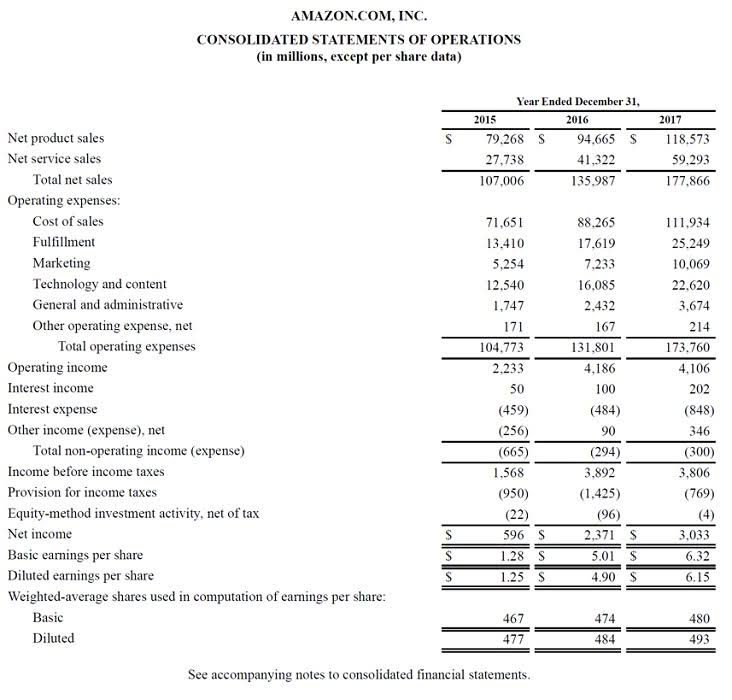
The accounting journal entry to create the allowance for doubtful accounts involves debiting the bad debt expense account and crediting the allowance for doubtful accounts account. The company can recover the account by reversing the entry above to reinstate the accounts receivable balance and the corresponding allowance for the doubtful account balance. Then, the company will record a debit to cash and credit to accounts receivable when the payment is collected. You’ll notice that because of this, the allowance for doubtful accounts increases.
- If there is a large, unexpected default, you can rest assured that we will pay the claim, effectively eliminating what could have been a devastating bad debt loss.
- Credit sales all come with some degree of risk that the customer might not hold up their end of the transaction (i.e. when cash payments left unmet).
- For example, based on previous experience, a company may expect that 3% of net sales are not collectible.
- After figuring out which method you’ll use, you can create the account in the chart of accounts.
- Rather than waiting to see exactly how payments work out, the company will debit a bad debt expense and credit allowance for doubtful accounts.
- Allowance For Doubtful Accounts is an estimate made by a business for the amount of its accounts receivable (money owed to the business by its customers) that will not be collected.
Let’s say your business brought in $60,000 worth of sales during the accounting period. Based on historical trends, you predict that 2% of your sales from the period will be bad debts ($60,000 X 0.02). Debit your Bad Debts Expense account $1,200 and credit your Allowance for Doubtful Accounts $1,200 for the estimated default payments.
Create allowance for doubtful accounts
An allowance for doubtful accounts, or bad debt reserve, is a contra asset account (either has a credit balance or balance of zero) that decreases your accounts receivable. When you create an allowance for doubtful accounts entry, you are estimating that some customers won’t pay you the money they owe. The allowance for doubtful accounts, aka bad debt reserves, is recorded as a contra asset account under the accounts receivable account on a company’s balance sheet. It’s a contra asset because it’s either valued at zero or has a credit balance. In this context, the contra asset would be deducted from your accounts receivable assets and considered a write-off. Regardless of company policies and procedures for credit collections, the risk of the failure to receive payment is always present in a transaction utilizing credit.
Then, the company establishes the allowance by crediting an allowance account often called ‘Allowance for Doubtful Accounts’. Though this allowance for doubtful accounts is presented on the balance sheet with other assets, it is a contra asset that reduces the balance of total assets. If a company has a history of providing for doubtful accounts recording or tracking bad debt, it can use the historical percentage of bad debt if it feels that historical measurement relates to its current debt. Therefore, it can assign this fixed percentage to its total accounts receivable balance since more often than not, it will approximately be close to this amount.
provision for doubtful accounts definition
Usually accounts payable involves the receipt of an invoice from the company providing the services or goods. Changes in credit policies, the aging of accounts receivable, and economic conditions can influence this adjustment. The allowance for doubtful accounts is estimated based on other factors, such as customer creditworthiness and economic conditions, which is useful when a more nuanced estimate is needed. By creating an allowance for doubtful accounts, a company can anticipate the loss due to bad debt and account for it in advance.

While assets have natural debit balances and increase with a debit, contra assets have natural credit balance and increase with a credit. The second method of estimating the allowance for doubtful accounts is the aging method. All outstanding accounts receivable are grouped by age, and specific percentages are applied to each group.
Write off an account
An allowance for doubtful accounts estimates the number of outstanding receivables a company does not expect to collect. Allowance for doubtful accounts is a contra-asset account listed as a negative or zero balance on a company’s balance sheet. It can also be referred to as Allowance for Uncollectible Expense, Allowance for Bad Debts, Provision for Bad Debts or Bad Debt Reserve. While collecting all the money you’re owed is the best-case scenario, small business owners know that things don’t always go as planned.
Beware the Working Capital Adjustment Trap – The CPA Journal
Beware the Working Capital Adjustment Trap.
Posted: Wed, 17 Aug 2022 07:00:00 GMT [source]
The company must be aware of outliers or special circumstances that may have unfairly impacted that 2.4% calculation. The aggregate balance in the allowance for doubtful accounts after these two periods is $5,400. Later, if a customer fails to pay their account balance and the company deems the account uncollectible, they would record another journal entry to write off the bad debt. The purpose of allowance for doubtful accounts is to manage the risk of uncollectible accounts. Companies often extend credit to customers and allow them to pay at a later date.
Definition of Provision for Doubtful Accounts
These plans are subject to frequent changes in law with respect to the deductibility of
contributions. Withdrawals of tax deferred contributions are taxed as income, including the capital gains from
such accounts. Our credit risk assessment services also allow you to thoroughly evaluate customer creditworthiness and make informed decisions about whom to extend credit to. To reverse the account, debit your Accounts Receivable account and credit your Allowance for Doubtful Accounts for the amount paid. GAAP since the expense is recognized in a different period as when the revenue was earned.
- The number of days it would take to pay the ending balance
in accounts payable at the average rate of cost of goods sold per day. - GAAP since the expense is recognized in a different period as when the revenue was earned.
- Accountants use allowance for doubtful accounts to ensure that their financial statements accurately reflect the current state of their receivables.
- If you use the accrual basis of accounting, you will record doubtful accounts in the same accounting period as the original credit sale.